
In the automated lab of the future, robots dissolve powders and pipette liquids. They log results, perform statistical analyses and flag anomalies. A scientist only steps in once experimentation is complete, reviewing an AI-generated report that informs their decision on what to do next.
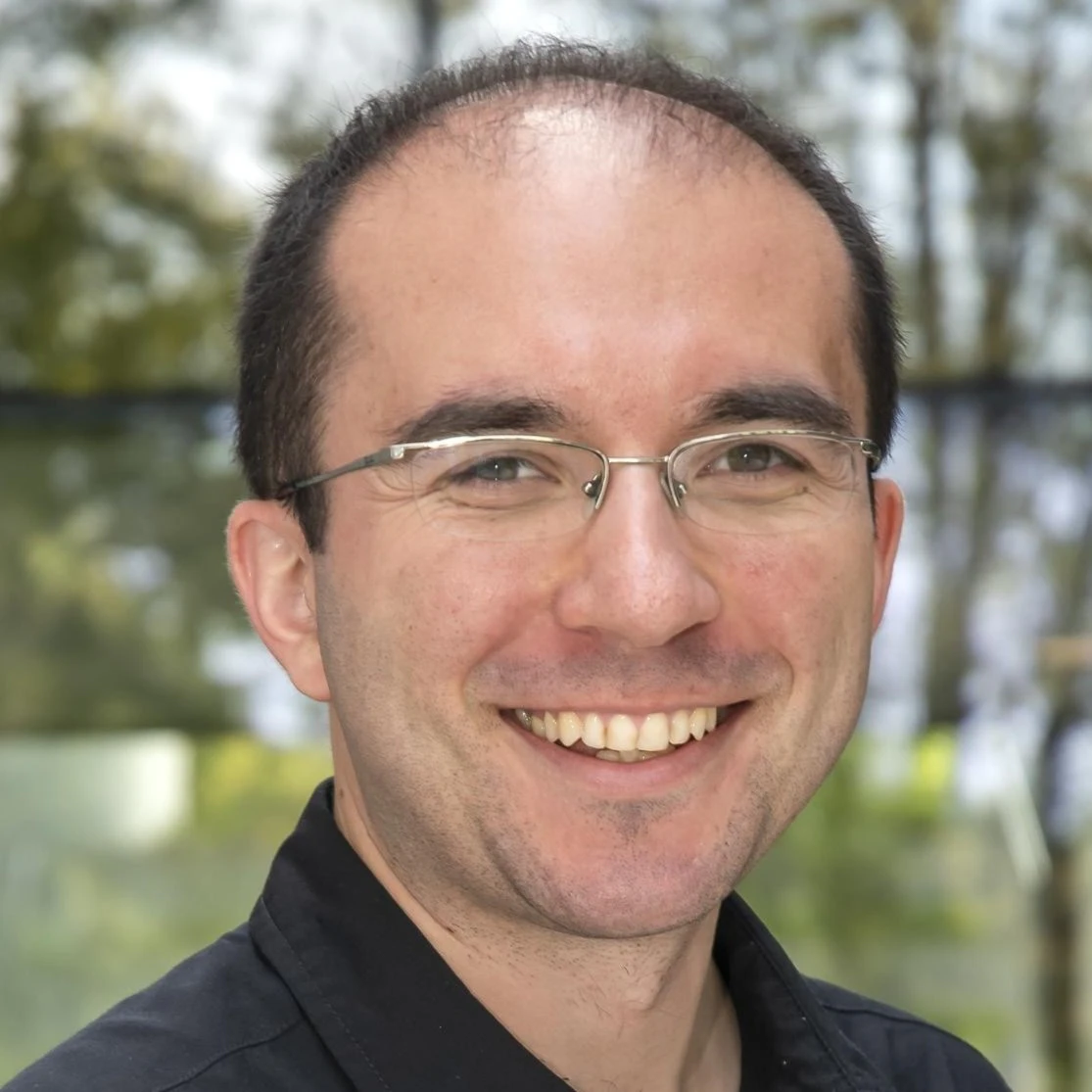
Florian Shkurti’s AI2050 research strives to make that lab possible. Shkurti’s goal is to automate lab work in chemistry and biology—especially in areas like drugs or materials discovery, which involve exploring vast libraries of molecules or testing countless compounds.
“Exploring all the potential molecular combinations is like looking for a needle in a haystack,” says Shkurti. “The scale of automation, combined with prior knowledge and scientific intuition, will make finding that needle easier.”
Florian Shkurti is an AI2050 Early Career Fellow and Assistant Professor in the Department of Computer Science at the University of Toronto. He builds robotics for dynamic physical environments, such as mobile manipulation systems or robots for environmental monitoring. His work tackles Hard Problem #4, developing solutions for humanity’s greatest challenges.
The AI2050 initiative gratefully acknowledges Fayth Tan for assistance in producing this community perspective.
Time and time again, the data collection process came up as a bottleneck in biology and chemistry labs.
Traditionally, a scientist looks at the results of an experiment, formulates a small model that explains them and makes predictions. If the predictions disagree with the results, the scientist has to troubleshoot the experiment or update their predictions and start again. In this era, we’re way past small models that explain individual results cleanly. We’re relying on large datasets and large models that have high predictive capability.
In this big data context, the scientific discovery loop starts with pre-training a model on a large body of datasets and papers. Using this consolidated knowledge, the model suggests new experiments, and a scientist can choose the most informative one.
Then, the experiment is executed with robots—hopefully, multiple experiments can be executed in parallel. After that, it’s a matter of figuring out if the results agree with the model’s knowledge and updating the model accordingly.
My collaborators and I have identified areas such as drug discovery and formulations to make life-saving medicines, as well as materials discovery to build things like more efficient batteries. These are hypothesis spaces that are incredibly, astronomically large. It’s impossible to exhaust every possible option one by one.
The other important factor in these areas is that experiments have high variance. They’re susceptible to a butterfly effect, where tiny changes at the beginning of the experiment cause massive changes at the end. By executing the same steps with low variance, robots can make the process more replicable.
Ideally, automation would ensure that a human scientist wouldn’t need to be involved in experimental execution. Scientists wouldn’t need to stay in the lab until midnight or over weekends just to monitor their experiments or take care of cell cultures. They’d be able to show up the next day and receive a statistical report of experimental results, from which they could draw conclusions.
I didn’t expect that choosing which problems to automate would be a challenge in and of itself. I thought chemists and biologists would have a laundry list of tasks that they’d like to automate, but automating research isn’t the same as automating a factory. Instead of a single drug or family of drugs, academia works on many different types of experiments. You have to not only maximize for scale, but also for experimental flexibility and diversity.
The other tension is that what may be an important problem for one community might not be exciting to the other. Sometimes, papers might automate problems that are interesting from a chemistry perspective, but don’t advance methodology enough to impress a roboticist. Or a paper that focuses on robotics might not convince chemists it has any applications to chemistry.
We’ve found that it takes time for different research communities to mix, but at equilibrium, it’s really rewarding. Even if finding projects is difficult under those constraints, we want to create incentives for communities to work together.
There are three problems in my AI2050 project that I would not have been able to work on if it wasn’t for my research in lab automation.
We’re collaborating on one such problem with Adji Bousso Dieng, another AI2050 Fellow. We’re working on the question of whether generative models memorize their training data. In 2023, Google published a paper in Nature claiming that they had synthesized novel materials. There were objections from the chemistry community about certain molecules being not new. What this situation highlighted was the difficulty in detecting whether AI suggestions are truly novel compositions of data, or if they’re just regurgitating examples from their training set.
Another problem we’re working on as part of my AI2050 project is how to optimize experiment design with large generative models that distill knowledge from previous experiments and scientific literature. We could train those models only on experimental data, or we could also train them on random textbooks and papers on the Internet. We’re interested in understanding the value of having general knowledge about a field versus restricting training data to clean experimental results when it comes to models’ ability to propose new experiments.
The last problem involves the long-standing issue of robots manipulating non-rigid objects like powders or liquids. These objects are not only difficult to model physically, but also difficult to control. While this is a known problem in robotics, it becomes crucial in chemistry and biology because most objects in the lab are non-rigid.
I expect scientists will still play a huge part in scientific discovery. Human intuition—the ability to bring things back to basics and develop toy models of understanding—is essential.
I do think that automation opens up more opportunities to hone scientific intuition. With current methods, junior scientists typically only execute a few experiments. They may lack the experience necessary to develop their own intuition unless they stumble into the right solution or work for someone with more expertise. Having more chances to develop better intuition strengthens the interaction between human and AI when determining the next experiment. It makes that symbiosis more useful.